

CrimethInc Publishes ICE Surveillance Protocol for Community Tracking of Federal Agents
EXECUTIVE SUMMARY
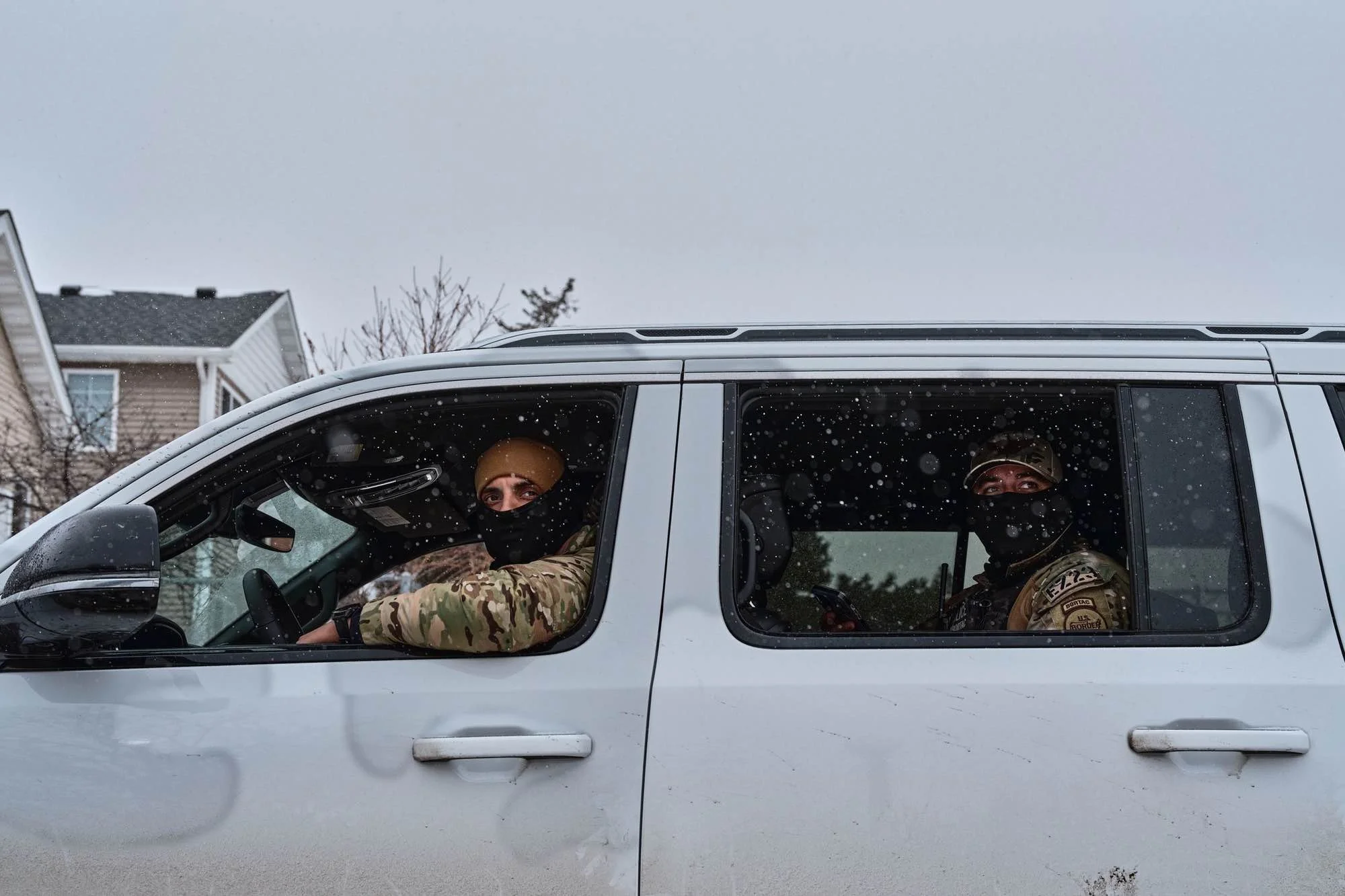
CrimethInc, a US-based anarchist publishing platform with an international readership, published a printable operational guide on July 16, 2026 instructing readers to follow and report on the movements of US Immigration and Customs Enforcement (ICE) vehicles using a military-derived surveillance reporting format. The guide, titled 'Protecting Your Neighbors by Following ICE Vehicles,' circulated across anarchist Telegram channels in the days following publication and was made available as a print-ready document for physical distribution in target neighborhoods.
ANALYSIS
The document instructs readers to identify ICE vehicles by known government-issue makes, models, colors, and plate configurations, then report sightings using the SALUTE protocol: Size, Activity, Location, Uniform, Time, and Equipment. That reporting format originated in US Army reconnaissance doctrine and is used to convey tactical information about opposing forces in a standardized format that can be transmitted verbally or by text. Its adoption by an activist surveillance network targeting federal agents represents a militarization of counter-ICE monitoring methodology, borrowing the vocabulary and structure of military intelligence to systematize civilian tracking of law enforcement officers.
The guide specifically identifies behavioral indicators to watch for: ICE vehicles exiting a highway, multiple agents in a single vehicle, and specific makes and body styles associated with government fleet purchases. Readers are instructed to compile and share license plate numbers and to build local databases of vehicle identifiers that can be cross-referenced across contributors. The stated goal is providing advance warning to neighbors so that subjects of enforcement action can evade contact before agents arrive.
Publication came during a period of elevated tension surrounding ICE enforcement operations. Three ICE-related civilian deaths occurred within eight days in Texas, Maine, and Florida earlier in July 2026, generating sustained national media coverage and protest activity at multiple detention facilities. CrimethInc's framing positions the guide as community protection, but operationally it creates a distributed counter-surveillance system directed at the movement patterns and identification of federal law enforcement personnel.
The printable format carries specific threat assessment significance. It allows the guide to be physically posted in laundromats, community boards, bus shelters, and neighborhood businesses in areas with high undocumented immigrant populations, reaching people without smartphones or Telegram access. Similar print-distribution campaigns by anarchist networks have achieved meaningful operational reach before law enforcement identified the threat, particularly in dense urban environments where community boards are actively used and monitored by residents.
The guide does not explicitly incite violence against ICE officers. However, a surveillance network that maps movement patterns, vehicle types, and operational timing of federal agents produces intelligence that can be used by actors with more aggressive intent than the stated audience. Several prior anti-ICE incidents, including the July 2025 attack on the Prairieland Detention Center in Alvarado, Texas, for which an eight-member North Texas cell received sentences totaling 450 years in 2026, involved coordinated groups that demonstrated advance knowledge of facility operations before the attack.
ICE field agents and federal law enforcement agencies operating in major metropolitan areas should expect that vehicle identification, route tracking, and operational pattern mapping may increasingly be conducted by distributed networks using this protocol or variants of it. The combination of digital coordination via Telegram and physical dissemination via printable materials creates a layered information infrastructure that does not depend on any single platform and is more difficult to disrupt than a centralized network. Fusion centers and ICE field offices should brief affected personnel on this campaign and consider vehicle security countermeasures in high-distribution jurisdictions.
SOURCES
