

Violent ISIS Propaganda Continues to Inspire Mass Casualty Incidents
Executive Summary
Recent arrests, propaganda releases, and online extremist activity demonstrate that the Islamic State continues to exert real-world influence despite its territorial defeat. A combination of official ISIS media, supporter forums, and loosely affiliated propaganda channels has increasingly emphasized antisemitic violence, holiday targeting, and lone-actor attacks in Western countries. The Bondi Beach Hanukkah massacre in Australia has become a central reference point within this ecosystem, explicitly endorsed by ISIS media and celebrated across extremist platforms. Parallel developments in Canada, Europe, and online spaces show how propaganda is translating into credible plots, criminal violence, and terrorism investigations, underscoring the persistent risk of mass-casualty attacks inspired by ISIS ideology.
Intelligence Analysis
The August 2025 arrests of three men in the Toronto area illustrate how ISIS-inspired radicalization increasingly overlaps with hate-motivated crime and local criminal behavior. Canadian authorities initially investigated two attempted kidnappings targeting women, incidents marked by extreme violence including the use of firearms, knives, and sexual assault. As the investigation expanded, law enforcement uncovered evidence linking one suspect, Waleed Khan, to the Islamic State through online activity, funding, and explicit expressions of willingness to act on ISIS direction.
The terrorism charges against Khan—conspiracy to commit murder for ISIS, provision of cryptocurrency and property to the group, and operation of a pro-ISIS Telegram channel—demonstrate a convergence that security services have warned about for years. ISIS propaganda routinely promotes opportunistic violence, misogyny, and antisemitism as interchangeable expressions of jihad. The targeting of women and Jewish community members in the Toronto case aligns closely with current ISIS messaging priorities, particularly its emphasis on attacking Jewish civilians and exploiting moments of perceived vulnerability in Western societies.
These arrests occurred shortly after the ISIS-inspired Bondi Beach Hanukkah attack in Sydney, which killed at least fifteen people. The temporal proximity heightened concern among Canadian and allied security agencies about copycat or inspired violence. While authorities assessed no imminent plots at the time, they emphasized that Jewish holidays and public gatherings remained realistic targets. The imposition of a publication ban in the Canadian case suggests investigators recovered sensitive material, likely including extremist communications or operational details relevant to broader counterterrorism efforts.
ISIS’s own media apparatus has treated the Sydney attack as a strategic success. Issue 526 of Al-Naba, the group’s flagship weekly publication, represents a notable escalation in propaganda posture. Rather than issuing a conventional claim of responsibility, the editorial titled “The Pride of Sydney” reframes the attack as a model operation that requires no formal adoption by ISIS leadership. This approach allows the group to benefit ideologically from the attack while maintaining operational ambiguity.
The editorial explicitly praises the attackers, celebrates the targeting of Jews during Hanukkah, and urges supporters to conduct similar attacks during holidays and public gatherings. It argues that modern jihad does not require centralized planning, training camps, or official pledges, asserting that adherence to ISIS methodology alone is sufficient. This narrative deliberately lowers the threshold for violence and aligns with years of ISIS guidance encouraging lone-actor or small-cell attacks using readily available means.
Al-Naba 526 also devotes significant space to attacking Muslim leaders, activists, and protesters who condemned the Sydney attack. By labeling them hypocrites or apostates, ISIS seeks to preempt internal dissent and delegitimize non-violent expressions of solidarity with Gaza or Palestinian causes. The message is clear: sympathy without violence is betrayal. This framing is designed to isolate supporters psychologically and reinforce an “us versus everyone” worldview that sustains long-term radicalization.
The same themes appear across ISIS-aligned online forums. In the days following the Bondi Beach attack, users on pro-ISIS platforms circulated compilation videos, alleged bodycam footage, and images of victims while praising the attackers as martyrs. Participants inflated casualty figures, spread unverified claims about victims’ identities, and debated whether the Islamic State would officially claim the attack through Amaq or Al-Naba. These discussions show how supporters actively attempt to integrate breaking news into ISIS’s ideological framework regardless of confirmed organizational ties.
Forum users also used the attack to condemn Muslim leaders who called for calm or unity, branding them apostates. Others injected unrelated ISIS media from Africa, Syria, and Somalia into the conversation to reinforce the perception of global momentum. Several posters encouraged roles such as media work, cyber support, and hijrah, highlighting that facilitation and propaganda remain central avenues of participation even when direct travel to conflict zones is unrealistic.
Beyond celebratory content, ISIS supporter spaces continue to circulate material aimed at shaping behavior and mindset. A pro-ISIS TechHaven post warning about phone tracking exemplifies how extremists weaponize surveillance anxiety. While the post references real concepts such as cell tower logs and advertising IDs, it exaggerates precision and certainty, claiming phones can be directly used for drone targeting or embassy surveillance. The intent is less about technical accuracy and more about fostering paranoia, discouraging normal civic life, and providing simple explanations for arrests that avoid acknowledging investigative work or informants.
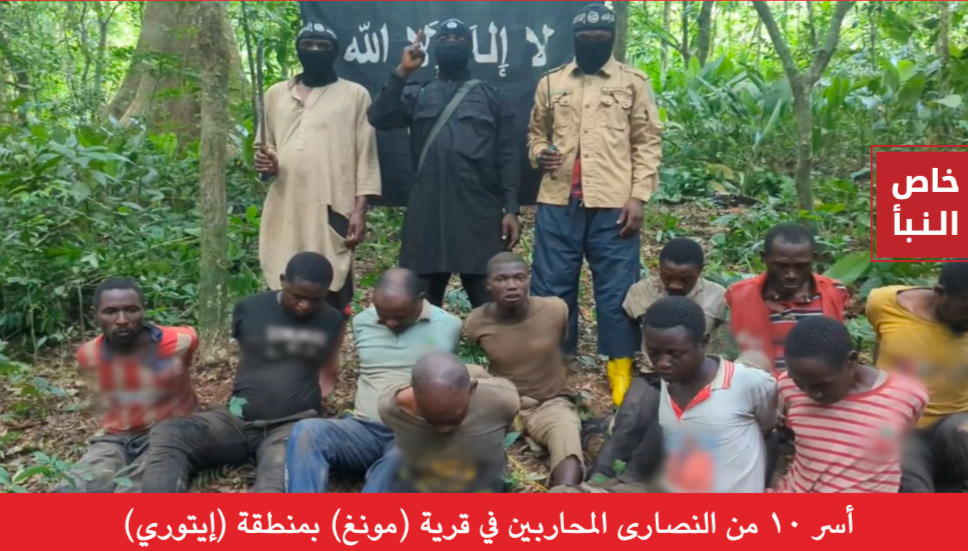
ISIS’s broader media output reinforces this ecosystem. Al-Naba issue 525 showcases ongoing operations in Africa and the Levant, projecting an image of sustained global activity. Reports of attacks in Nigeria, the Democratic Republic of Congo, Mozambique, Somalia, Iraq, and Syria are paired with infographics emphasizing geographic spread and cumulative casualties. These claims, whether exaggerated or not, serve to counter narratives of decline and present ISIS as a transnational insurgency rather than a defeated organization.
Other propaganda releases further illuminate internal dynamics. An editorial framing Western governments and Syrian rebel leaders as “taghut manufacturers” calls followers to choose the “path of terror” explicitly, rejecting all political or militant alternatives. Meanwhile, an ISIS-K pamphlet urging unity behind Abu Hafs suggests concern about internal dissent and leadership legitimacy. Such messaging typically emerges when organizations feel pressure from losses, fragmentation, or declining cohesion.
Threat signaling has also intensified around symbolic dates. A recently circulated image depicting an armed figure in a crowded winter city street, paired with a Quranic verse about preparing strength, appears designed to intimidate civilians ahead of New Year celebrations. While not tied to a specific plot, the imagery reflects established extremist tactics: combining religious justification, seasonal symbolism, and urban settings to inspire imitation while maintaining plausible deniability.
These propaganda trends coincide with ongoing kinetic operations against ISIS. In December 2025, U.S. forces launched extensive strikes on ISIS targets in Syria following the killing of two American soldiers and a civilian interpreter. While such operations degrade infrastructure and leadership, they also provide ISIS media with fresh narratives of martyrdom, retaliation, and endurance, which are rapidly recycled into propaganda aimed at global audiences.
Taken together, these developments reveal a consistent pattern. ISIS no longer relies on centralized command-and-control attacks in the West. Instead, it cultivates an ecosystem in which official media, supporter forums, and semi-autonomous propaganda channels normalize violence, glorify attackers, and encourage individual initiative. This model complicates detection and prevention, particularly during holiday periods and public events that carry symbolic resonance.
Analyst Note
ISIS’s strength today lies less in operational coordination than in ideological persistence. By endorsing attacks without formally claiming them and by framing lone-actor violence as sufficient and even preferable, the group maximizes influence while minimizing risk to its core leadership. Counterterrorism efforts must therefore address not only plots and cells but also the propaganda environments that sustain motivation and justify violence.
Sources
Semper Incolumem – Three Toronto men arrested for hate-motivated crimes and ISIS-related terrorism
Semper Incolumem – ISIS uses Al-Naba 526 to endorse the Sydney attack
Semper Incolumem – ISIS forum reactions to the Bondi Beach attack
Semper Incolumem – Pro-ISIS TechHaven surveillance fear messaging
Semper Incolumem – ISIS supporter propaganda posters
Semper Incolumem – ISIS Editorial 510 analysis
Semper Incolumem – ISIS-K unity pamphlet
NBC News – U.S. strikes ISIS targets in Syria
Council on Foreign Relations – Expert brief on ISIS threat after Bondi Beach
